
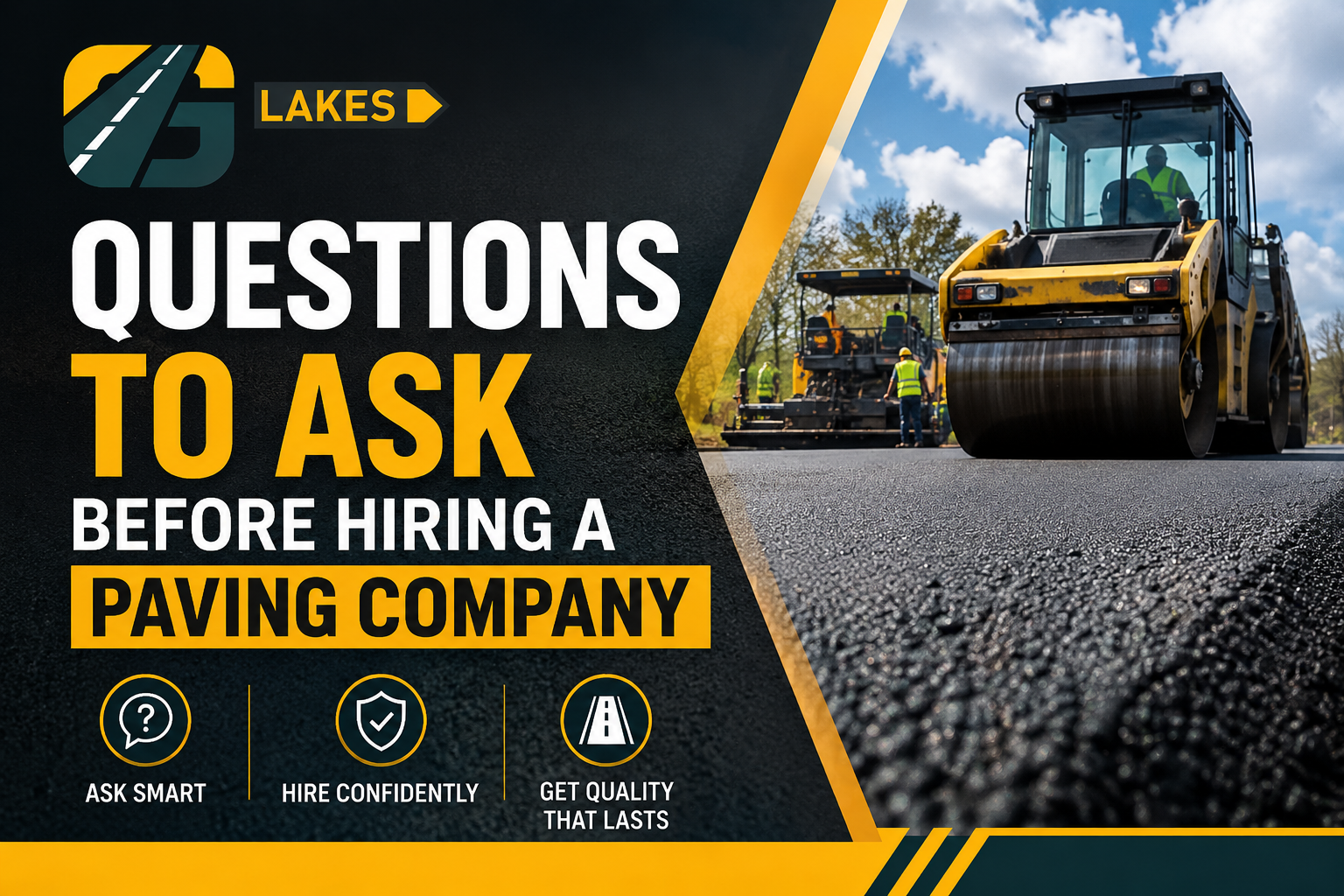
A fresh driveway or a newly paved parking lot is a significant investment that can instantly boost your property’s curb appeal and value. However, paving is one of those industries where the quality of the work is often hidden beneath the surface, and the shortcomings of an asphalt paving contractor’s work are missed by the naked eye. If the foundation is weak or the materials are thin, you won’t know it until the first freeze-thaw cycle leaves you with cracks and puddles.
To ensure your investment lasts for decades rather than months, you need to vet your contractor thoroughly.
Paving is expensive, and the average cost of a driveway installation goes somewhere between $3000 to $15000, with most homeowners spending around $6000 to $10000, depending on the materials used, the size of the property, and the location.
Here are the essential questions you must ask before signing a contract with your asphalt paving contractor.
1. Are You Licensed, Bonded, and Fully Insured?
This is the “barrier to entry” question. Paving involves heavy machinery and hot materials. If a worker is injured on your property or a piece of equipment hits your garage, you don’t want to be held liable.
A reputable company like Great Lakes Asphalt Paving & Sealcoating will have general liability and workers’ compensation. Being “bonded” provides an extra layer of protection, ensuring the company fulfills its contractual obligations. Don’t just take their word for it; ask for certificates of insurance sent directly from their agency.
2. How Will You Handle the Sub-Base and Drainage?
If an asphalt paving contractor tells you they can “just pour over the old surface” without inspecting what’s underneath, walk away. Roughly 75% of pavement failures are caused by a failing sub-base.
Ask specifically:
- What is the thickness of the stone base? For a standard residential driveway, you generally want 6–8 inches of compacted stone.
- How will you ensure proper drainage? Water is known for making its way even in the narrowest of places and is the enemy of asphalt and concrete. The surface must be graded so that water flows away from your home’s foundation and doesn’t pool in the center of the drive.
3. What Are the Exact Specifications of the Materials?
Not all asphalt is created equal. Some contractors use “recycled” mixes that are cheaper but may not last as long in residential settings.
- Thickness: Ensure they specify the compacted thickness, not just the thickness when it’s loose. For most driveways, 2 inches of compacted asphalt is the gold standard for an overlay.
- Grade: Ask if they are using a surface mix, such as a finer aggregate for a smooth look, or a binder mix like larger stones for strength.
4. Can You Provide 3–5 Local References from Three Years Ago?
Anyone can make a driveway look good on the day it’s finished. The real test is how it looks after three winters in the United States of America. Ask for references for jobs completed several years ago. If the contractor is proud of their work, they’ll have a list of satisfied customers on their website who can testify to the pavement’s durability.
5. Who Will Actually Be Performing the Work?
Many large paving companies sell the job and then subcontract the labor to a different crew. While subcontracting isn’t always a bad sign, it can lead to communication breakdowns. You want to know if there will be an on-site supervisor present to ensure the project stays on track and meets the promised specifications.
6. What Does the Warranty Cover and for How Long?
A standard paving warranty is typically one year. This covers “workmanship and materials.” While lifetime warranties advertised are often marketing gimmicks filled with loopholes. A legitimate contractor stands by their work but is honest about the fact that pavement requires maintenance like sealcoating and refinishing from time to time to last a lifetime.
7. What is the Payment Schedule?
Never pay 100% upfront. A common red flag is a contractor who claims they need the full amount to “buy materials.” Established companies have lines of credit and a proper plan that they follow for each step. A typical schedule might be a 10–20% deposit to hold the date, with the balance due upon completion.
8. How Do You Handle Underground Utilities?
Paving often requires excavation. Ask if they handle the “Call Before You Dig” (811) process to mark lines for water, gas, and electricity. You don’t want to find out the hard way that your internet line was only three inches below the surface.
To conclude the blog, we can say that hiring the right paving company is about more than just the lowest bid. It’s about finding the right contractor that understands the mechanics of the soil, the drainage requirements, and the importance of quality materials. At Great Lakes Asphalt Paving & Sealcoating, we answer your FAQ’s, and give you the assurance that our work, be it a driveway installation or a paving job, will remain for years to come.