
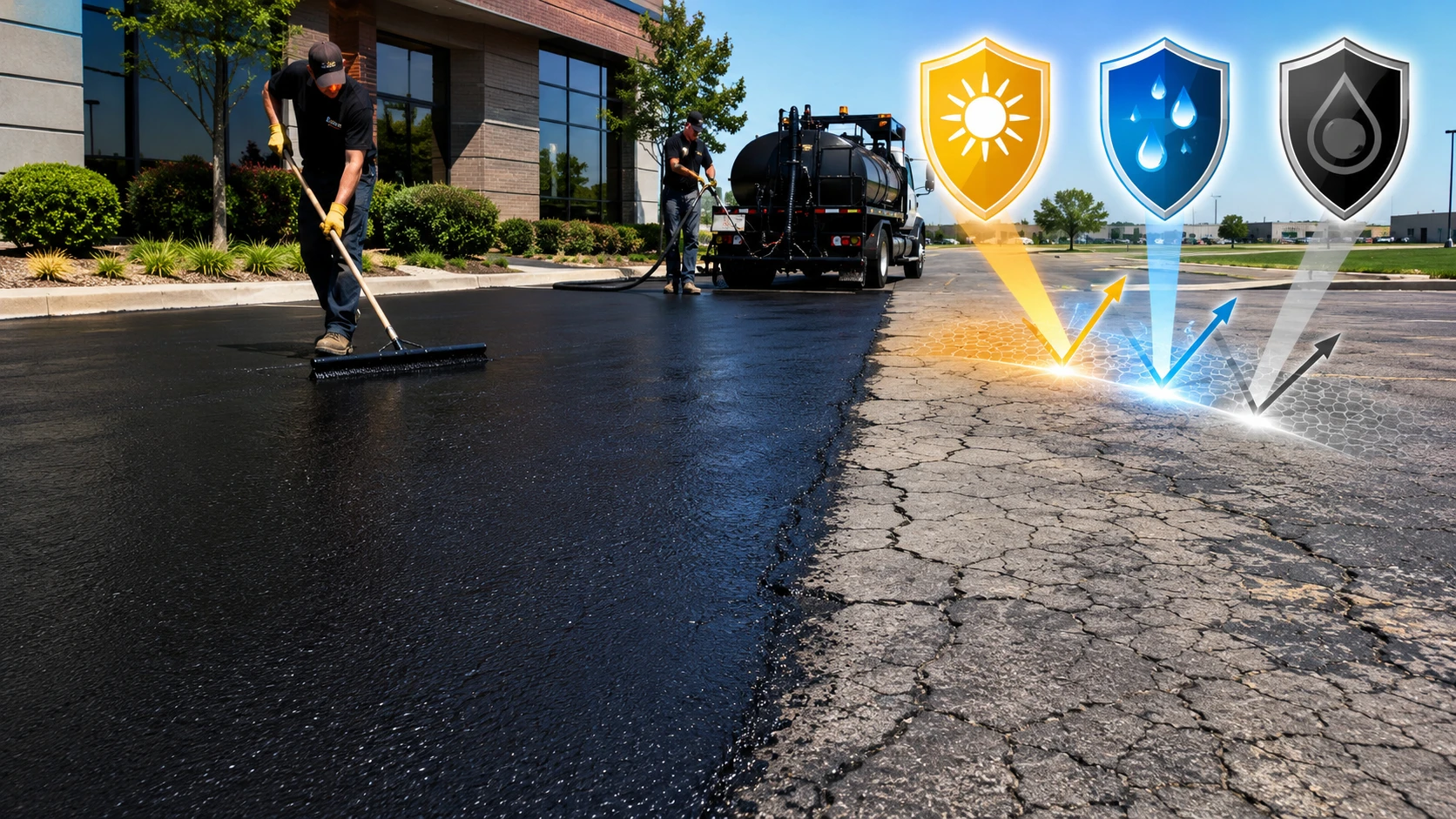
Asphalt pavement is a major investment for homeowners, business owners, and property managers. Whether it is a driveway, parking lot, private road, or commercial surface, keeping asphalt in good condition is important for safety, appearance, and long-term value.
One of the most effective ways to protect asphalt and increase its lifespan is sealcoating. Many property owners overlook this important maintenance service until visible damage appears. However, preventive maintenance is far more affordable than major repairs or complete replacement.
In this guide, you will learn how sealcoating extends pavement life, why it is important, and how regular sealcoating can save money while keeping asphalt surfaces looking their best.
What Is Sealcoating?
Sealcoating is the process of applying a protective coating over asphalt pavement. This coating acts as a barrier between the asphalt surface and damaging elements such as water, sunlight, chemicals, and vehicle fluids.
The sealcoat creates a protective layer that helps preserve the flexibility and strength of asphalt while improving its appearance. After application, the pavement gains a fresh black finish that looks clean and well-maintained.
Sealcoating is commonly used on:
- Residential driveways
- Commercial parking lots
- Apartment complexes
- Private roads
- Industrial facilities
- Retail centers
Although sealcoating does not repair major structural damage, it plays a critical role in preventing deterioration and extending pavement life.
Why Asphalt Deteriorates Over Time
Before understanding how sealcoating helps, it is important to know why asphalt begins to fail.
Asphalt is constantly exposed to environmental and traffic-related stress. Over time, these factors weaken the pavement and create cracks, potholes, and surface damage.
Common causes of asphalt deterioration include:
- UV rays from the sun
- Rainwater and moisture
- Snow and ice
- Freeze-thaw cycles
- Oil and gasoline spills
- Heavy vehicle traffic
- Oxidation
- Dirt and debris
Without protection, these factors slowly break down the asphalt binder that holds the pavement together.
How Sealcoating Extends Pavement Life
Sealcoating helps protect asphalt from multiple forms of damage. Here are the most important ways it increases pavement longevity.
1. Protects Against Water Damage
Water is one of the biggest threats to asphalt pavement.
When water enters small cracks or surface openings, it can penetrate beneath the pavement. This weakens the base layer and causes the asphalt to deteriorate faster.
During cold weather, trapped water freezes and expands. This process widens cracks and can eventually create potholes.
Sealcoating creates a waterproof barrier that reduces moisture penetration. By keeping water out, the pavement remains stronger and more stable for a longer period.
2. Prevents Damage from UV Rays
Continuous exposure to sunlight causes oxidation in asphalt.
Oxidation occurs when ultraviolet rays break down the oils and binders within the pavement. As these materials deteriorate, the asphalt becomes dry, brittle, and more prone to cracking.
Sealcoating helps block harmful UV rays and slows the oxidation process. This allows the pavement to maintain its flexibility and structural integrity.
The result is fewer cracks and a longer-lasting surface.
3. Protects Against Oil and Chemical Spills
Vehicles often leak fluids such as:
- Motor oil
- Gasoline
- Transmission fluid
- Hydraulic fluid
These chemicals can soften and weaken asphalt over time.
When petroleum-based products sit on untreated pavement, they break down the asphalt binder and accelerate deterioration.
Sealcoating adds a protective layer that resists chemical penetration. This protection reduces damage from spills and helps preserve the pavement surface.
4. Reduces Surface Cracking
Cracks are one of the first signs of asphalt aging.
Once cracks appear, water and debris can enter the pavement structure, causing more extensive damage.
Sealcoating helps reduce surface wear and minimizes the risk of early cracking. While it does not repair large cracks, it can help prevent small surface imperfections from becoming serious problems.
This proactive maintenance approach significantly extends pavement life.
5. Slows Oxidation and Aging
Asphalt naturally ages over time.
As oxidation progresses, the pavement loses flexibility and becomes more vulnerable to cracking and breakage.
Sealcoating slows the aging process by shielding asphalt from oxygen, sunlight, and weather exposure.
Regular sealcoating helps maintain the pavement’s original properties and delays costly deterioration.
6. Protects Against Traffic Wear
Every vehicle that drives across asphalt creates stress on the pavement surface.
Parking lots and driveways experience daily wear from:
- Vehicle tires
- Turning movements
- Braking
- Heavy loads
Sealcoating provides an additional layer of protection that absorbs some of this wear.
By reducing direct exposure to traffic-related stress, the pavement experiences less surface degradation over time.
7. Prevents Expensive Repairs
One of the biggest advantages of sealcoating is cost savings.
Replacing asphalt pavement can be expensive. Even major repairs such as crack filling, patching, and pothole repair can add up quickly.
Routine sealcoating helps prevent many common pavement issues before they become serious.
By investing in regular maintenance, property owners can avoid costly repairs and maximize the return on their pavement investment.
Additional Benefits of Sealcoating
Beyond extending pavement life, sealcoating offers several other advantages.
Improves Curb Appeal
Freshly sealcoated asphalt has a rich black appearance that instantly improves the look of any property.
Whether it is a home driveway or a commercial parking lot, a well-maintained surface creates a positive impression.
Enhances Property Value
A clean and attractive pavement surface can contribute to higher property value.
Potential buyers and customers often view well-maintained pavement as a sign that the property is properly cared for.
Makes Cleaning Easier
Sealcoated surfaces are smoother and less porous.
This makes it easier to remove dirt, debris, and stains while maintaining a cleaner appearance.
Improves Safety
Sealcoating helps create a smoother surface and can improve visibility when pavement markings are applied.
A well-maintained pavement surface reduces hazards associated with cracks and potholes.
How Often Should Asphalt Be Sealcoated?
The ideal sealcoating schedule depends on several factors, including:
- Climate conditions
- Traffic volume
- Pavement age
- Surface condition
In most cases, asphalt should be sealcoated every 2 to 3 years.
New asphalt typically requires several months of curing before the first sealcoat application.
A professional pavement inspection can determine the best maintenance schedule for your specific property.
Signs Your Pavement Needs Sealcoating
Property owners should watch for signs that sealcoating may be needed.
Common indicators include:
- Fading black color turning gray
- Small surface cracks
- Rough texture
- Water absorption
- Surface oxidation
- Minor wear patterns
Addressing these issues early can help prevent larger problems and extend pavement life.
Professional Sealcoating vs. Delaying Maintenance
Many property owners wait until pavement damage becomes obvious before taking action.
Unfortunately, delayed maintenance often leads to:
- Larger cracks
- Potholes
- Water infiltration
- Structural damage
- Higher repair costs
Professional sealcoating is a preventive solution that protects asphalt before serious damage develops.
Regular maintenance is almost always more affordable than extensive repairs or pavement replacement.
Choosing a Reliable Sealcoating Contractor
The quality of sealcoating application is just as important as the material itself.
When selecting a contractor, look for:
- Experience in asphalt maintenance
- Proper surface preparation methods
- High-quality sealcoating products
- Positive customer reviews
- Transparent pricing
- Proven results
Working with experienced professionals helps ensure long-lasting protection and maximum pavement performance.
Conclusion
Sealcoating is one of the most effective ways to extend the life of asphalt pavement. It protects against water damage, UV rays, oxidation, chemicals, and daily traffic wear while helping property owners avoid expensive repairs.
Regular sealcoating preserves the appearance, strength, and durability of asphalt surfaces for years to come. By investing in preventive maintenance, property owners can maximize the lifespan of their driveways, parking lots, and roadways while reducing long-term maintenance costs.
For property owners looking to protect their asphalt investment, routine sealcoating remains one of the smartest and most cost-effective pavement maintenance solutions available.