
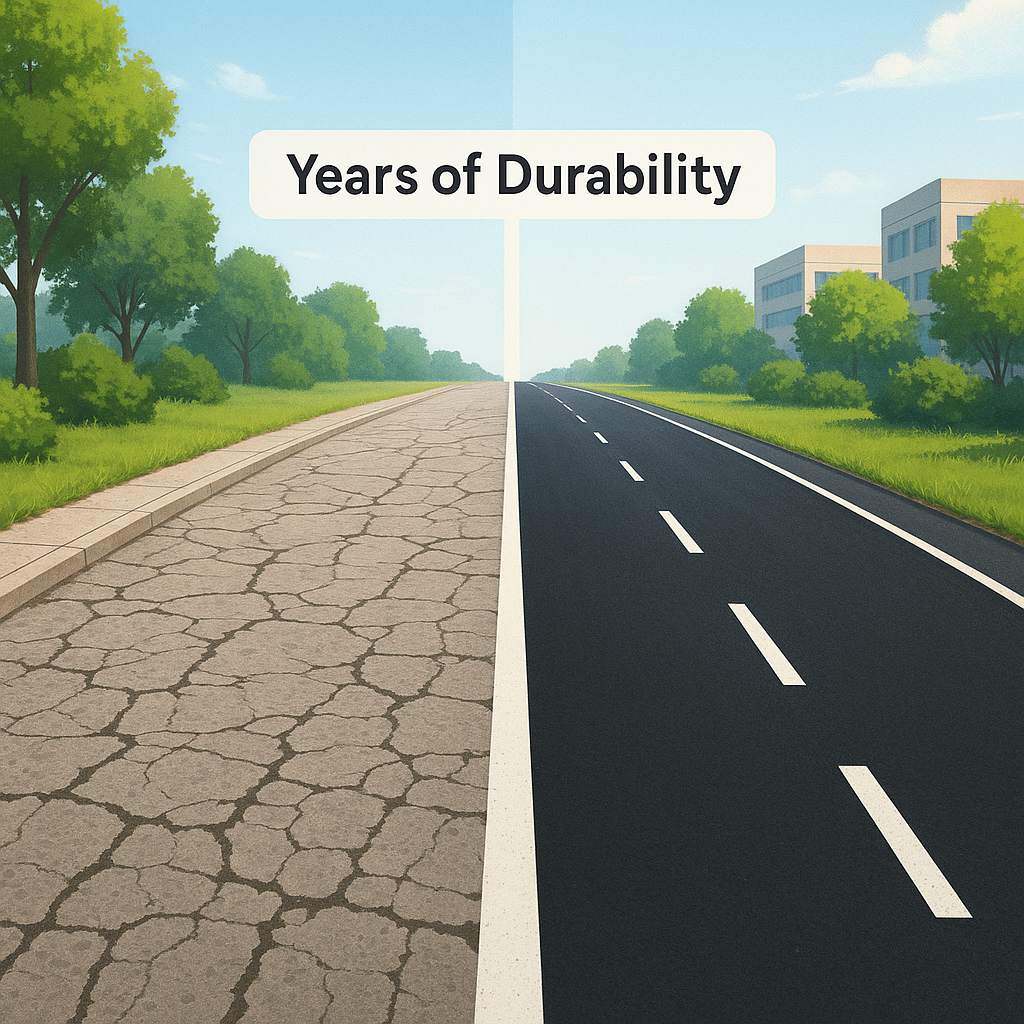
Driving into a parking lot or pulling up to a smooth black driveway is so easy. It is also easy to forget how much work goes into keeping that surface strong. Asphalt is tough and lasts a good amount of time, but only if it is cared for. A lot of people (*coughs* physics nerds) usually wonder how long asphalt stays in good condition. Many homeowners and property managers also ask this exact question before planning repairs or new paving projects. We have got you! Keep your property looking great for years with Great Lakes Asphalt Paving & Sealcoating. We know what it takes to make asphalt’s lifespan long, and this guide will break everything down in the simplest way possible.
Why Understanding Asphalt Lifespan Matters
The answer to asphalt lifespan is not a single number. Sometimes it lasts 15 years, sometimes 30. We know that is a huge difference when you are planning budgets or managing a business property. Many people assume asphalt is “install it and forget it,” but that is not the case. Weather, traffic, and maintenance all affect how long it lasts.
Asphalt needs to be managed well, or you may deal with cracks that grow quickly. Along with potholes that become safety hazards. Additionally, water damage from weather conditions can weaken the base, and this leads to higher repair costs. Knowing what affects asphalt lifespan is essential for any property owner.
Average Asphalt Lifespan
As mentioned, most asphalt surfaces last 15 to 30 years. The reason for this wide range depends on how well the asphalt is installed and maintained. Think of asphalt like your skin. If you protect it, moisturize it, and keep it clean, it feels good for a long time. Damage appears faster if you ignore it for days.
Let’s break down the cost with a table:
| Driveways | 20 to 25 years |
| Parking lots | 15 to 20 years |
| Roads | 15 to 30 years (depending on traffic load) |
5 Major Factors That Affect Asphalt Lifespan
The quality of materials and installation plays a big role. That is why working with experts like Great Lakes Asphalt Paving & Sealcoating is so important. Come along as we discuss some factors that play a role in asphalt lifespan
1. Weather Conditions
Heat softens asphalt. Freezing temperatures make it stiff and brittle. Places with frequent freeze-thaw cycles see cracks form faster. Water is especially damaging because it finds its way into cracks and weakens the base layer.
2. Traffic Load
Light car traffic is no problem. However, heavy trucks, all the time, can speed up wear and tear. This is why commercial lots need maintenance more than residential driveways.
3. Installation Quality
Proper grading, material quality, base preparation, and thickness matter. A strong foundation is the key to durability. The asphalt won’t last as long if the base is weak or thin.
4. Maintenance Routine
Sealcoating and crack filling can add years to asphalt’s lifespan. Small issues quickly turn into big replacements..
5. Drainage System
Standing water is asphalt’s biggest enemy. Water needs to flow away properly at all times. Otherwise, it causes potholes and premature aging.
How to Extend the Asphalt Lifespan
As a property owner, we know these issues can stress you out. The good news is you can extend your asphalt’s life by many years. Don’t believe us? Let’s see how:
Regular Sealcoating
Sealcoating protects the asphalt from oil spills and unnecessary moisture. It is an extremely important step in maintaining your asphalt. Experts recommend sealing every 3 years.
Fill Cracks Early
A tiny crack today can become a pothole tomorrow. Crack fillings stop water from sneaking into places where it is not needed.
Keep the Surface Clean
Oil can soften asphalt and lead to faster deterioration. Removing harmful debris and cleaning oil spots keeps the asphalt healthy.
Fix Drainage Problems
If you see water pooling, don’t ignore it. It is a warning. Take special care of drainage, as it prevents thousands of dollars in long-term damage.
When Is It Time to Replace Your Asphalt?
Even well-maintained asphalt won’t last forever. If you notice any of the following signs, it may be time for resurfacing or complete replacement. The warning signs are:
- Widespread cracks
- Recurring potholes
- Uneven surfaces
- Fading and brittleness
Conclusion
Understanding what is affecting your asphalt lifespan helps you protect your investment. Although asphalt usually lasts between 15 and 30 years, consistent maintenance can push it closer to the 30-year mark. All your asphalt needs is some good care and expertise from Great Lakes Asphalt Paving & Sealcoating. Trust us, your surface can stay strong for decades.
FAQs
Does asphalt last as long as concrete?
Concrete lasts longer than asphalt, but an asphalt driveway can last more than 20 years with regular maintenance.
Does asphalt get reused?
Yes! Asphalt is highly recyclable. Old asphalt pavement can be ground up and reused as “reclaimed asphalt pavement” in new asphalt mixes.
Is sealing an asphalt driveway necessary?
It is necessary for longevity. Sealcoating protects the asphalt from the damaging effects of UV rays, oxidation, water penetration, and automotive fluids.
How to tell if asphalt is bad?
You can tell the asphalt is bad if you see interconnected cracks, widespread raveling, potholes, and depressions where water pools.
Can you put new asphalt on top of old asphalt?
Yes, you can apply a new layer of asphalt (called an overlay or resurface) over old asphalt.